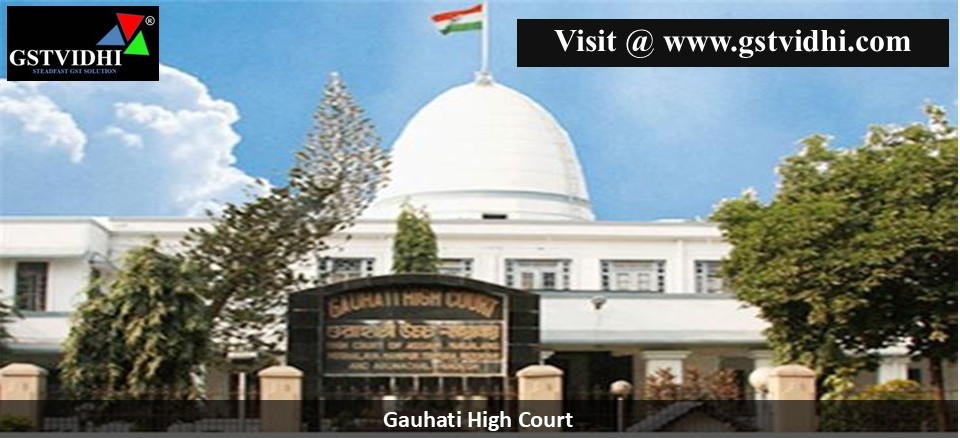
Gauhati High Court Refuses to Waive Mandatory Pre-Deposit for
GST Appeal - Mahesh Kumar Agarwala v. Union of India
(Case: Mahesh Kumar Agarwala v. Union of India & Others (WP(C)
No. 1359 of 2026 Dated 9 March 2026)
Introduction
Under the GST regime,
when a taxpayer challenges an adjudication order before the appellate
authority, the law requires a mandatory pre-deposit of a specified
percentage of the disputed tax amount. This requirement is contained in Section
107 of the CGST Act and is intended to ensure that appeals are filed
responsibly while protecting the interests of revenue.
In a recent decision, the
Gauhati High Court considered whether it could direct the GST department to
entertain an appeal without insisting on the statutory pre-deposit. The
petitioner argued that the pre-deposit requirement was onerous due to the large
tax demand.
However, the High Court
declined to interfere and held that the requirement of pre-deposit is a
statutory mandate and cannot be waived by the Court in the absence of
extraordinary circumstances. The judgment was delivered in the case of Mahesh
Kumar Agarwala v. Union of India, where the Court dismissed the writ
petition but clarified that the petitioner is free to file a statutory appeal.
Background
of the Case
The petitioner, Mahesh
Kumar Agarwala, is the proprietor of M/s Ganesh Enterprise, located
in Bongaigaon, Assam. The GST authorities initiated proceedings against the
petitioner alleging wrongful availment of Input Tax Credit (ITC).
Following adjudication,
an order dated 30 September 2025 was passed under Section 74 of the
CGST Act confirming a demand of:
- ₹7,59,52,817
as tax
- Interest
- Penalty
The demand was based on
allegations that the petitioner had availed fake Input Tax Credit through
bogus invoices.
Instead of filing an
appeal before the appellate authority, the petitioner approached the High Court
under writ jurisdiction challenging the adjudication order.
Arguments
of the Petitioner
The petitioner raised
multiple arguments before the Court.
Wrong Invocation of
Section 74
The petitioner contended
that Section 74 of the CGST Act had been wrongly invoked. According to
the petitioner, the provision can only be applied when there is:
- Fraud
- Wilful misstatement
- Suppression of facts
The petitioner argued
that none of these conditions existed in the present case.
Burden of Mandatory
Pre-Deposit
The petitioner also
pointed out that the GST law requires a 10% mandatory pre-deposit of the
disputed tax amount for filing an appeal. Considering the large demand
amount, the petitioner argued that the pre-deposit requirement was extremely
burdensome.
Therefore, the petitioner
requested the Court to issue directions allowing him to file a statutory appeal
without insisting on the mandatory pre-deposit, or with a reduced
deposit.
The petitioner also
expressed willingness to provide reasonable security or bond to protect
the interests of revenue while the appeal was pending.
Arguments
of the Department
The GST department
strongly opposed the writ petition.
The counsel for the
department argued that the adjudication order was a reasoned order which
clearly recorded findings regarding:
- Misstatement of facts
- Suppression of material information
- Use of fake invoices
The department further
submitted that the investigation had revealed absence of e-way bills from
toll plaza records on the route between Meghalaya and Bongaigaon in Assam,
which raised doubts regarding the genuineness of the transactions.
Therefore, the department
argued that the petitioner should pursue the statutory appellate remedy,
which already exists under the GST law.
Observations
of the High Court
After hearing both sides,
the Gauhati High Court examined the impugned order dated 30 September 2025.
The Court observed that
the adjudication order had clearly recorded reasons for confirming the demand
and had considered relevant facts and materials. The Court further noted an
important legal principle regarding writ jurisdiction.
The Court stated that
while exercising certiorari jurisdiction, it is not required to examine:
- The adequacy of the reasons
- The sufficiency of the evidence
Unless the decision is perverse
or affected by mala fide, the High Court generally does not interfere with
adjudication orders.
In the present case, the
Court did not find any such exceptional circumstances that would justify
interference.
Issue of
Waiver of Mandatory Pre-Deposit
The key issue raised by
the petitioner was whether the Court could direct the authorities to entertain
an appeal without insisting on mandatory pre-deposit. The Court carefully
considered this request but declined to grant the relief. The Court held that
the requirement of pre-deposit is a statutory requirement under the GST law
and cannot be waived by judicial direction in the absence of extraordinary
circumstances.
Since the petitioner had
not demonstrated any exceptional or extraordinary circumstances, the Court held
that such a direction could not be granted.
Decision of
the Court
After considering the
facts and arguments, the Gauhati High Court dismissed the writ petition.
However, the Court
clarified an important point. It stated that the observations made in the order
are tentative in nature and should not prejudice the petitioner if he
decides to file an appeal.
Therefore, the petitioner
remains free to file a statutory appeal before the appropriate appellate
authority, which will examine the matter independently on its merits.
Conclusion
The decision in Mahesh
Kumar Agarwala v. Union of India reaffirms the importance of the statutory
appellate mechanism under GST law.
The Gauhati High Court
made it clear that mandatory pre-deposit for filing an appeal is a statutory
condition and cannot ordinarily be waived through writ jurisdiction.
While the Court dismissed
the petition, it ensured that the petitioner’s right to file an appeal remains
intact. The appellate authority will examine the dispute independently if the
petitioner chooses to pursue the statutory remedy.
The ruling emphasizes
that taxpayers must follow the proper legal procedure under GST law, and
courts will not ordinarily relax statutory requirements unless compelling
circumstances exist.
Disclaimer: All the Information is based on the notification, circular advisory and order issued by the Govt. authority and judgement delivered by the court or the authority information is strictly for educational purposes and on the basis of our best understanding of laws & not binding on anyone.
Click here