Proceedings Against Deceased Person Under GST Are Void:
Allahabad High Court Ruling
Introduction
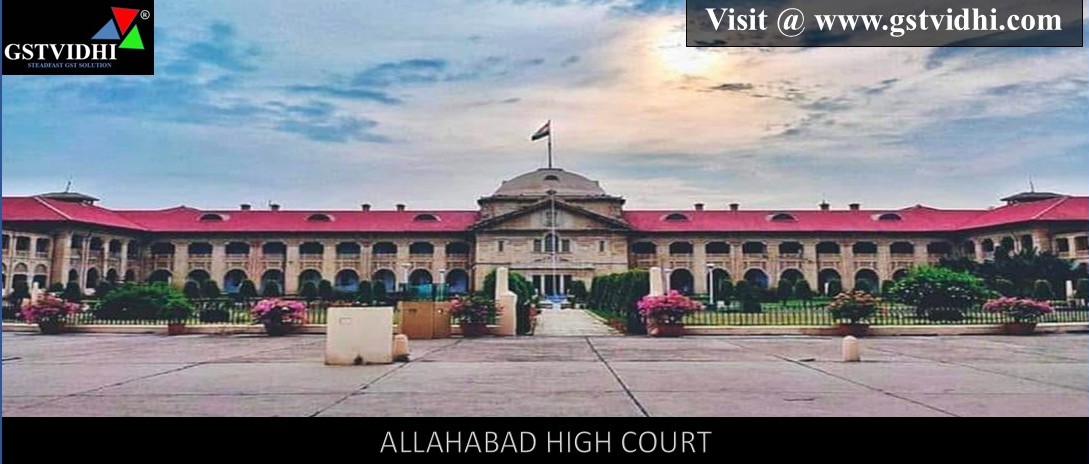
The Allahabad High Court,
in a significant ruling in the case of Amit Kumar Sethia (Deceased) vs State
of U.P., has addressed an important procedural issue under the Goods and
Services Tax law concerning the validity of proceedings initiated against a
deceased person. The judgment clarifies the scope and applicability of Section
93 of the CGST Act, 2017, and emphasizes that while tax liability may survive,
the procedure adopted for its determination must strictly adhere to principles
of natural justice. The Court has categorically held that any proceedings
conducted against a dead person are void ab initio and unsustainable in law.
Factual
Background of the Case
In the present case, the
original taxpayer, Amit Kumar Sethia, was the proprietor of M/s Sethia Trading
Company and had expired on 20 April 2021. Following his death, the GST
registration of the proprietorship concern was duly cancelled with effect from 13
May 2021. Despite being aware of the death and cancellation of registration,
the GST department issued a show cause notice dated 13 September 2023 in the
name of the deceased person. Subsequent reminders were also issued; however, as
the registration had already been cancelled and the person had passed away, the
legal representative had no access to the GST portal and, therefore, could not
respond to such notices. Consequently, an order under Section 73(9) of the CGST
Act was passed on 17 November 2023, raising a demand of ₹21,49,585.60 against
the deceased.
Challenge
by the Legal Representative
Aggrieved by the impugned
order, the wife of the deceased, acting as the legal representative, approached
the High Court by way of a writ petition. It was contended that the entire
proceedings, including the issuance of show cause notice and passing of adjudication
order, were fundamentally flawed and legally untenable, as they were conducted
against a dead person. It was further argued that such proceedings are void ab
initio and violate the basic principles of natural justice, as no opportunity
of hearing was ever provided to the legal heirs.
Contentions
of the Department
The department attempted
to justify its action by placing reliance on Section 93 of the CGST Act, 2017.
It was argued that the said provision specifically provides for the recovery of
tax dues from the legal representatives of a deceased person and permits
determination of tax liability even after the death of the taxpayer. On this
basis, the department contended that the impugned order was legally sustainable
and enforceable against the legal heirs.
Scope and
Interpretation of Section 93 of the CGST Act
The High Court undertook
a detailed analysis of Section 93 and observed that the provision primarily
deals with the liability to pay tax, interest, or penalty in cases where a
person liable under the Act dies. The section provides that where the business
is continued by the legal representative, such representative becomes liable
for the dues, and where the business is discontinued, the liability is
restricted to the extent of the estate inherited. However, the Court
categorically noted that the provision is limited to determining liability and
does not address or authorize the initiation or continuation of adjudication
proceedings against a deceased person.
Invalidity
of Proceedings Against Deceased Person
The Court held that
proceedings initiated and concluded in the name of a deceased person are
inherently void and unsustainable in law. It emphasized that a dead person is
not a legal entity capable of responding to notices or participating in
adjudication proceedings. Therefore, any show cause notice issued in the name
of a deceased individual, and any order passed pursuant thereto, lacks legal
validity from inception and is liable to be quashed.
Requirement
of Notice to Legal Representatives
A crucial aspect
highlighted by the Court was the necessity of issuing notice to the legal
representatives of the deceased. It was observed that once the statute
contemplates liability on legal heirs under Section 93, it is a sine qua non
that such legal representatives must be put to notice and given an opportunity
to present their case before any determination of tax liability is made.
Failure to follow this mandatory procedural requirement vitiates the entire
proceedings.
Violation
of Principles of Natural Justice
The Court further held
that the impugned proceedings were in clear violation of the principles of
natural justice. Since no notice was issued to the legal representatives and no
opportunity of hearing was provided to them, the adjudication process was fundamentally
flawed. The mere uploading of notices on the GST portal cannot be considered
valid service, particularly when the registration had already been cancelled
and the taxpayer had expired.
Judgment
and Relief Granted
In light of the above
findings, the Allahabad High Court allowed the writ petition and quashed the
order dated 17 November 2023 passed under Section 73(9) of the CGST Act.
However, the Court granted liberty to the department to initiate fresh
proceedings in accordance with law, provided that such proceedings are
undertaken against the legal representatives and in compliance with the
prescribed procedure.
Legal
Position Emerging from the Judgment
This judgment establishes
a clear legal position that while tax liability may survive the death of a
taxpayer, the procedure for its determination must be legally valid and
directed against the appropriate person, i.e., the legal representative.
Section 93 does not empower the authorities to initiate or continue proceedings
against a deceased person, and any such action is liable to be declared void.
Practical
Implications for Taxpayers and Authorities
From a practical
standpoint, this ruling has significant implications for both taxpayers and tax
authorities. For taxpayers and legal heirs, it provides a strong ground to
challenge any proceedings initiated in the name of a deceased person. For the
department, it underscores the importance of due diligence in verifying the
status of the taxpayer and ensuring that notices are properly issued to legal
representatives. Any deviation from this procedure may render the entire demand
unsustainable.
Conclusion
The Allahabad High Court
has reaffirmed a fundamental principle of law that procedural compliance is as
important as substantive liability. While the law permits recovery of tax dues
from legal representatives, it does not allow authorities to bypass due process
by proceeding against a deceased person. The ruling serves as a vital safeguard
against arbitrary action and ensures that the rights of legal heirs are
adequately protected within the framework of GST law.
Disclaimer: All the Information is based on the notification, circular advisory and order issued by the Govt. authority and judgement delivered by the court or the authority information is strictly for educational purposes and on the basis of our best understanding of laws & not binding on anyone.
Click here