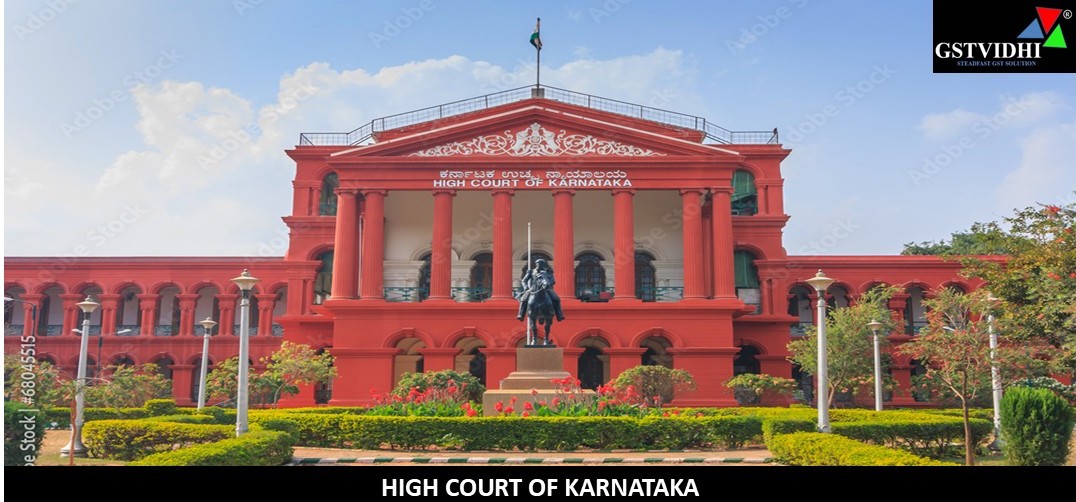
Karnataka High Court Extends Benefit of GST Circulars for
Rectification of ITC Errors to Financial Year 2019-20 and Quashes Adjudication
Order
M/s D. S. Engineering Works LIP v. Assistant Commissioner of
Commercial Taxes & Others / High Court of Karnataka / 22 January 2026 / Writ
Petition No. 102205 of 2025 (T-RES)
Introduction
of the Case
The present case was
decided by the Dharwad Bench of the High Court of Karnataka in a writ petition
filed by M/s D. S. Engineering Works LIP. The petitioner challenged an
adjudication order passed under the GST laws and also sought the benefit of
certain GST circulars issued by the Government relating to rectification of
errors in invoices and Input Tax Credit (ITC) mismatches.
The dispute mainly
concerned the applicability of Circular No. 183/15/2022-GST and Circular No.
193/05/2023-GST to the financial year 2019-20. The case also involved
interpretation of Section 16(2)(c) of the CGST/SGST Acts relating to conditions
for availing Input Tax Credit.
Facts of
the Case
The petitioner, M/s D. S.
Engineering Works LIP, was subjected to adjudication proceedings under the GST
law for the financial year 2019-20. An adjudication order dated 06.08.2024 was
passed against the petitioner by the Assistant Commissioner of Commercial
Taxes.
The petitioner approached
the High Court seeking multiple reliefs, including challenge to the
constitutional validity of Section 16(2)(c) of the CGST/SGST Acts, quashing of
the adjudication order, and extension of the benefit of GST circulars issued
for rectification of invoice-related errors.
During the hearing, the
petitioner did not press the constitutional challenge to Section 16(2)(c) and
mainly relied upon Circular No. 183/15/2022-GST dated 27.12.2022 and the
earlier decision of the Karnataka High Court in Wipro Limited India v. Assistant
Commissioner of Central Taxes.
The petitioner argued
that although the circular specifically referred to financial years 2017-18 and
2018-19, the benefit should also be extended to financial year 2019-20 where
similar errors existed.
Submissions
by the Petitioner
The petitioner submitted
that the GST circulars provided a mechanism for rectification of errors
committed in invoices and statutory forms relating to Input Tax Credit claims.
Reliance was placed upon
the decision of the Karnataka High Court in Wipro Limited India, where the
Court had adopted a justice-oriented approach and extended the benefit of
Circular No.183/15/2022-GST even to the financial year 2019-20.
It was argued that the
petitioner’s case involved similar factual circumstances and therefore denial
of the benefit merely because the circular expressly referred to earlier years
would be unjust and arbitrary.
The petitioner also
sought quashing of the adjudication order and reconsideration of the matter in
light of the circulars issued by the GST authorities.
Submissions
by the Respondents
The State authorities
opposed the petition and argued that Circular No.183/15/2022-GST was applicable
only to financial years 2017-18 and 2018-19.
According to the
respondents, the petitioner’s transactions pertained to financial year 2019-20
and therefore Circular No.193/05/2023-GST dated 17.07.2023 would govern the
case instead of the earlier circular.
The respondents contended
that the petitioner could not claim automatic benefit under Circular
No.183/15/2022-GST for the year 2019-20.
Analysis
and Judgment of the Court
The High Court considered
the earlier judgment delivered in Wipro Limited India v. Assistant Commissioner
of Central Taxes. The Court noted that in the said decision, it had already
been held that where identical errors existed across multiple assessment years,
the benefit of Circular No.183/15/2022-GST could also be extended to financial
year 2019-20 by adopting a justice-oriented approach.
The Court observed that
the petitioner’s case involved the same nature of issues and therefore similar
relief ought to be granted. The Court further noted that Circular
No.193/05/2023-GST expressly covered the period from 01.04.2019 to 31.12.2021
and therefore the petitioner was entitled to consideration under both
circulars.
Accordingly, the High
Court directed the authorities to take necessary steps in relation to the
petitioner for assessment year 2019-20 in terms of both Circular
No.183/15/2022-GST dated 27.12.2022 and Circular No.193/05/2023-GST dated
17.07.2023.
The Court also quashed
the impugned adjudication order dated 06.08.2024 and directed the authorities
to reconsider the matter afresh strictly in accordance with law and the
relevant circulars.
Conclusion
The judgment in M/s D. S.
Engineering Works LIP v. Assistant Commissioner of Commercial Taxes &
Others is an important decision relating to rectification of GST Input Tax
Credit errors and applicability of beneficial circulars. The Karnataka High Court
reaffirmed that beneficial GST circulars should be interpreted in a
justice-oriented manner and their benefit should not be denied merely due to
technical limitations regarding assessment years. The Court also clarified that
where identical issues exist across multiple years, authorities should adopt a
fair and practical approach while dealing with taxpayers’ claims. The decision
provides significant relief to taxpayers facing ITC mismatch disputes for
financial year 2019-20.
Disclaimer: All the Information is based on the notification, circular advisory and order issued by the Govt. authority and judgement delivered by the court or the authority information is strictly for educational purposes and on the basis of our best understanding of laws & not binding on anyone.
Click here