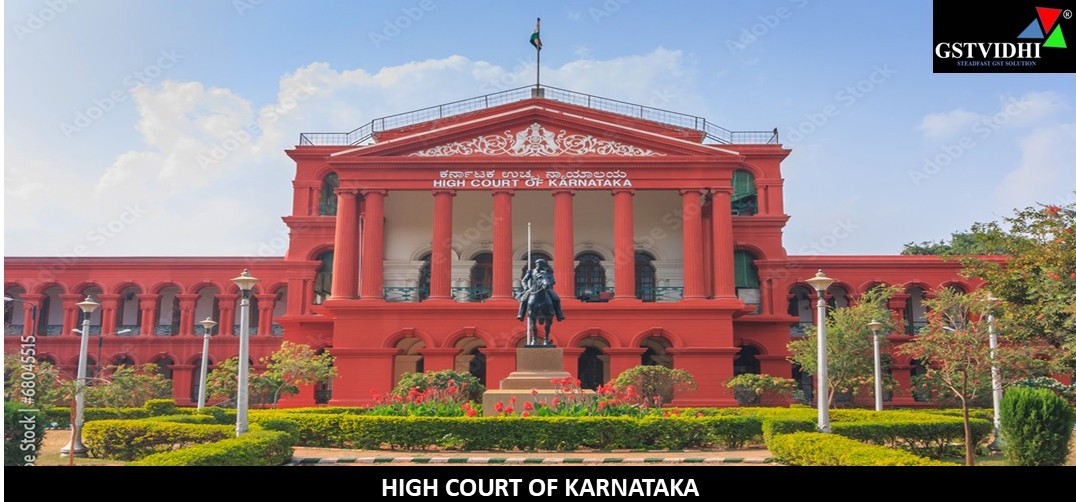
Karnataka High Court Sets Aside Ex-Parte GST Assessment After
Accepting Taxpayer’s Explanation Regarding Auditor’s Lapse and Return Filing
Errors
M/s Raghunath Marketing v. Commercial Tax Officer (Audit) &
Others / High Court of Karnataka / 28 January 2026 / W.P. No. 1930 of 2026
(T-RES)
Introduction
of the Case
The Karnataka High Court
in M/s Raghunath Marketing v. Commercial Tax Officer (Audit) & Others dealt
with the validity of an ex-parte adjudication order passed under Section 73(9)
of the KGST/CGST Act where the taxpayer failed to respond to departmental
notices due to lapse on the part of its auditor.
The petitioner challenged
the adjudication order on the ground that the proceedings had culminated in an
ex-parte assessment without submission of any reply to the notices issued by
the department. The petitioner further contended that the dispute mainly arose
due to errors in filing GST returns which could have been properly explained
during adjudication proceedings if an opportunity had been granted.
The case highlights the
justice-oriented approach adopted by the Karnataka High Court in matters
involving ex-parte GST assessments and reiterates that taxpayers should
ordinarily be granted an opportunity to contest proceedings on merits where
bona fide explanations are demonstrated.
Facts of
the Case
M/s Raghunath Marketing,
a proprietary concern registered under GST in Bengaluru, filed a writ petition
before the Karnataka High Court challenging the adjudication order dated
28.06.2024 passed under Section 73(9) of the KGST/CGST Act for the financial year
April 2019 to March 2020.
The petitioner also
challenged the consequential order issued in Form GST DRC-07 dated 28.06.2024.
According to the
petitioner, the adjudication proceedings culminated in an ex-parte order
because no reply could be filed before the department. The petitioner submitted
that the failure to respond to notices occurred due to lapse on the part of the
auditor who was unavailable during the relevant period.
The petitioner further
explained that the returns had been filed contrary to the sales register and
therefore the discrepancies required detailed explanation during adjudication
proceedings. The petitioner relied upon a comparative table produced in the writ
petition to demonstrate the nature of the alleged mistakes in return filing.
Submissions
by the Petitioner
The petitioner argued
that the ex-parte adjudication order was passed because the auditor handling
the GST matters was unavailable at the relevant point of time, resulting in
absence of response to the notices issued by the department.
It was further submitted
that the dispute involved mistakes in filing returns vis-à-vis the sales
registers maintained by the petitioner. According to the petitioner, the
discrepancies could have been properly explained during adjudication
proceedings had an opportunity been granted to participate.
The petitioner therefore
requested the Court to set aside the adjudication order and restore the matter
to the stage of reply to the notices so that the case could be contested on
merits.
Submissions
by the Respondents
The Revenue authorities
opposed the writ petition and argued that the adjudication order, though
ex-parte in nature, was passed solely due to the lapse of the petitioner and
there was no fault on the part of the adjudicating authority.
The department contended
that notices had been properly served and therefore the petitioner could not
seek reopening of proceedings after failing to respond earlier.
Analysis
and Judgment of the Court
The Karnataka High Court
examined the adjudication order and noted that the proceedings had culminated
in an ex-parte order without any reply being filed by the petitioner.
The Court took note of
the petitioner’s explanation regarding the lapse of the auditor and the alleged
errors in filing GST returns contrary to the sales registers. The Court also
referred to the comparative table produced by the petitioner showing the prima
facie discrepancies in the returns.
Although the Revenue
authorities contended that notices had been duly served and the lapse was
attributable entirely to the petitioner, the Court observed that considering
the serious consequences flowing from the adjudication order and the prima
facie nature of the alleged errors, the ends of justice would be served by
granting another opportunity to the petitioner to participate in the
proceedings.
Accordingly, the High
Court set aside the adjudication order passed under Section 73(9) of the
KGST/CGST Act. The matter was remitted back to the stage of reply to GST
DRC-01A dated 11.01.2024.
The Court directed the
petitioner to appear before the adjudicating authority on 16.02.2026 and
clarified that if the petitioner failed to avail the opportunity granted by the
Court, the indulgence shown would automatically stand revoked.
At the same time,
considering the lapse on the part of the petitioner in not responding earlier,
the Court imposed a cost of Rs.10,000/- payable to the High Court Legal
Services Committee.
The Court further
clarified that all contentions on merits were kept open and that the
observations made in the order were only for the purpose of disposal of the
writ petition and should not be construed as findings on merits.
Conclusion
The judgment in M/s
Raghunath Marketing v. Commercial Tax Officer (Audit) & Others reiterates
the importance of granting effective opportunity to taxpayers in GST
adjudication proceedings, especially in cases involving ex-parte assessments
arising from bona fide procedural lapses.
The Karnataka High Court
adopted a justice-oriented approach by setting aside the ex-parte adjudication
order after considering the petitioner’s explanation regarding the auditor’s
lapse and the alleged errors in GST return filing. The ruling emphasizes that
disputes involving apparent discrepancies in returns should ordinarily be
adjudicated on merits after giving taxpayers an opportunity to explain their
case.
At the same time, the
Court balanced equities by imposing costs upon the petitioner for failure to
diligently participate in the original proceedings. The decision further
strengthens the consistent judicial approach favouring fair hearing and
substantive adjudication in GST matters.
Disclaimer: All the Information is based on the notification, circular advisory and order issued by the Govt. authority and judgement delivered by the court or the authority information is strictly for educational purposes and on the basis of our best understanding of laws & not binding on anyone.
Click here