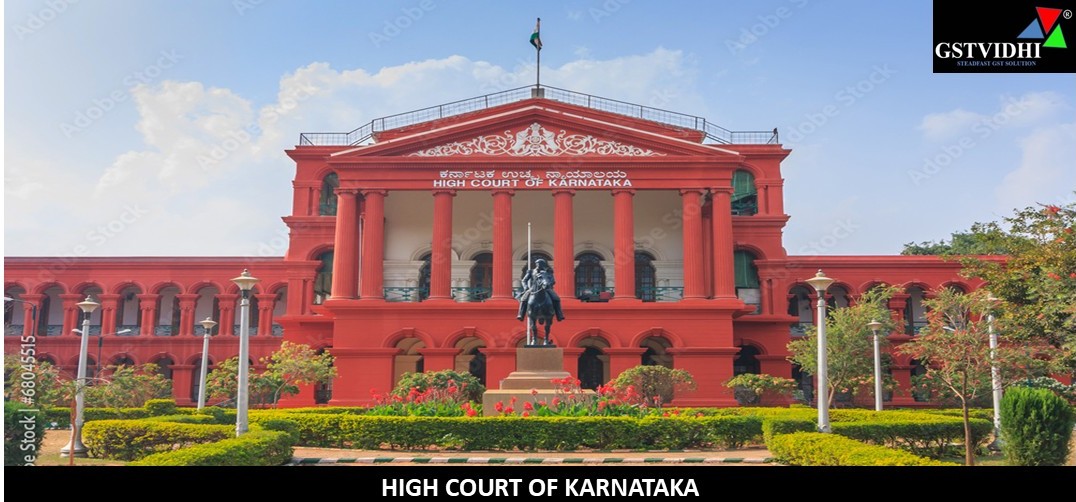
GST Assessment Passed Without Reply to Show Cause Notice - Karnataka
High Court Sets Aside Due to Taxpayer’s Ill-Health
Prashanth A.B. v. Deputy Commissioner of Commercial Taxes
(Audit) & Others / High Court of Karnataka / 20 January 2026 / W.P. No.
1275 of 2026 (T-RES)
Introduction
of the Case
The Karnataka High Court
in Prashanth A.B. v. Deputy Commissioner of Commercial Taxes (Audit) &
Others dealt with the validity of a best judgment assessment order passed under
Section 73(9) of the KGST/CGST Act in the absence of any reply by the taxpayer
to the show cause notice.
The petitioner challenged
the adjudication order and consequential summary order on the ground that due
to ill-health, he could not respond to the show cause notice, resulting in an
ex-parte best judgment assessment. The case primarily concerned whether another
opportunity should be granted to the taxpayer to contest the matter on merits
despite failure to participate in the original proceedings.
The judgment reflects the
justice-oriented approach adopted by the Karnataka High Court in cases where
ex-parte GST assessments are passed due to bona fide circumstances preventing
taxpayers from participating in adjudication proceedings.
Facts of
the Case
The petitioner, Prashanth
A.B., filed a writ petition before the Karnataka High Court challenging the
Order-in-Original dated 29.08.2024 passed under Section 73(9) of the KGST/CGST
Act for the tax period 2019-20.
The petitioner also
challenged the summary of the adjudication order issued in Form GST DRC-07 and
sought consequential reliefs.
Upon examining the
records, the Court observed that the adjudication order had been passed in the
absence of any reply by the taxpayer to the show cause notice. The assessment
order was therefore passed on the basis of “Best Judgment Assessment.”
According to the
petitioner, due to serious ill-health, he could not prepare or submit a reply
to the show cause notice, which resulted in the ex-parte assessment order being
passed against him.
The petitioner requested
the Court to set aside the adjudication order and restore the matter to the
stage of reply to the show cause notice so that he could participate in the
proceedings on merits.
Submissions
by the Petitioner
The petitioner argued
that the failure to respond to the show cause notice was neither deliberate nor
intentional. It was submitted that due to ill-health, the petitioner was unable
to submit reply to the show cause notice within the prescribed time.
The petitioner contended
that the adjudication order was passed ex-parte without consideration of any
defence or explanation on merits. Therefore, the petitioner sought restoration
of the proceedings to enable filing of reply and participation in fresh adjudication
proceedings.
Submissions
by the Respondents
The Revenue authorities
opposed the writ petition and submitted that the petitioner himself was solely
responsible for the lapse leading to the ex-parte adjudication order.
According to the
department, sufficient opportunity had already been granted during the course
of adjudication proceedings and therefore the petitioner could not seek
reopening of the matter after failing to respond earlier.
Analysis
and Judgment of the Court
The Karnataka High Court
examined the impugned adjudication order and observed that the order had been
passed without any reply on merits being submitted by the petitioner to the
show cause notice.
The Court took note of
the petitioner’s assertion that due to ill-health he was unable to submit reply
to the show cause notice. The Court accepted the bona fide nature of the
explanation furnished by the petitioner and held that the ends of justice would
be served by granting another opportunity to participate in the proceedings.
Accordingly, the High
Court set aside the Order-in-Original passed under Section 73(9) of the
KGST/CGST Act as well as the consequential summary order issued in Form GST
DRC-07. The matter was remitted back to the adjudicating authority to the stage
of filing reply to the show cause notice.
The Court directed the
petitioner to appear before the adjudicating authority on 04.02.2026 and
clarified that if the petitioner failed to avail the opportunity granted by the
Court, the indulgence shown would automatically stand revoked.
At the same time,
considering the lapse on the part of the petitioner in not responding earlier,
the Court imposed a cost of Rs.5,000/- payable to the High Court Legal Services
Committee.
The Court further
clarified that all contentions on merits were kept open for fresh adjudication
proceedings.
Conclusion
The judgment in Prashanth
A.B. v. Deputy Commissioner of Commercial Taxes (Audit) & Others reiterates
the importance of providing adequate opportunity to taxpayers before
finalization of GST assessments. The Karnataka High Court adopted a justice-oriented
approach by setting aside the ex-parte best judgment assessment after accepting
the taxpayer’s explanation that ill-health prevented participation in the
proceedings.
The ruling highlights
that substantive rights of taxpayers should not ordinarily be defeated due to
bona fide circumstances resulting in non-response to show cause notices. At the
same time, the Court balanced equities by imposing costs upon the petitioner
for the procedural lapse committed during the adjudication process.
The decision further
reinforces the consistent approach adopted by the Karnataka High Court in
restoring GST proceedings to the stage of reply wherever ex-parte assessments
are passed without effective participation of taxpayers and where bona fide
reasons for non-participation are demonstrated.
Disclaimer: All the Information is based on the notification, circular advisory and order issued by the Govt. authority and judgement delivered by the court or the authority information is strictly for educational purposes and on the basis of our best understanding of laws & not binding on anyone.
Click here