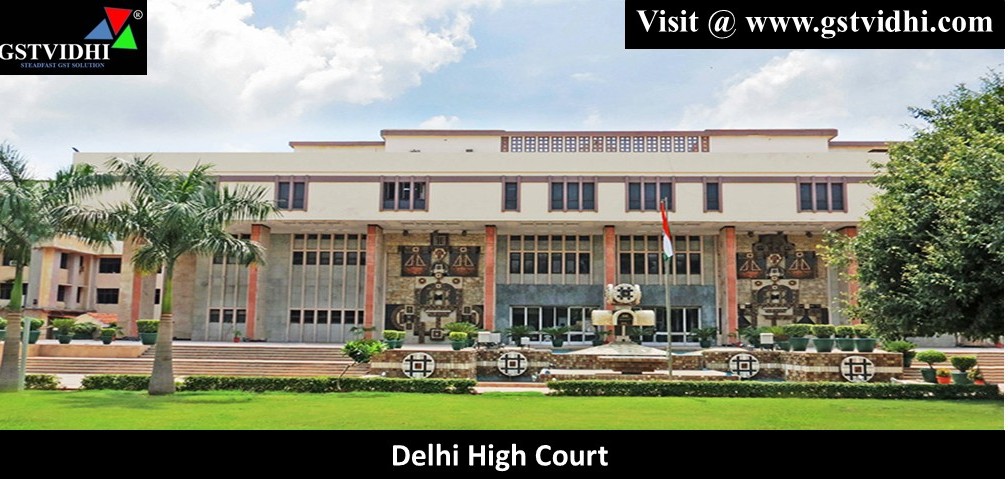
Delhi High Court Quashes Retrospective GST Registration
Cancellation Due to Vague Show Cause Notice and Violation of Natural Justice
(M/s
Glo Interio Through Its Proprietor C.S. Chhheda (HUF) v. Sales Tax Officer,
Ward 15 & Others / High Court of Delhi / 19 January
2026 / W.P.(C) 655/2026)
Introduction
In a significant judgment
concerning retrospective cancellation of GST registration, the High Court of
Delhi in M/s Glo Interio Through Its Proprietor C.S. Chhheda (HUF) v. Sales
Tax Officer, Ward 15 & Others quashed the GST cancellation order and
the appellate order on the ground that the show cause notice was vague and
violated principles of natural justice.
The Court held that a
vague show cause notice, which does not specify the period of alleged default,
the amount of tax unpaid, or the proposed retrospective effect of cancellation,
deprives the taxpayer of an effective opportunity of hearing guaranteed under
Article 14 of the Constitution of India.
The judgment is important
because it reiterates that GST authorities cannot mechanically cancel
registrations with retrospective effect without issuing a detailed and specific
show cause notice enabling the taxpayer to properly defend itself.
Facts of
the Case
The petitioner, M/s Glo
Interio through its proprietor C.S. Chhheda (HUF), filed a writ petition
challenging the Order-in-Appeal dated 26.09.2025 as well as the GST
registration cancellation order dated 23.01.2021 issued in Form GST REG-19.
The petitioner had
obtained GST registration on 05.06.2019 under GSTIN No. 07AABHC5471L2Z6. According
to the petitioner, after discontinuing business operations, an application was
voluntarily made seeking cancellation of GST registration under Section 29 of
the GST Act.
However, thereafter a
show cause notice dated 14.01.2021 was issued alleging failure to pay tax,
interest, or penalty beyond a period of three months from the due date and
calling upon the petitioner to explain why the registration should not be
cancelled.
Since no reply was
submitted by the petitioner, the authorities proceeded to cancel the GST
registration retrospectively with effect from the very date of registration
i.e., 05.06.2019.
Aggrieved by the
retrospective cancellation, the petitioner preferred an appeal before the
appellate authority. The petitioner argued that there was a possibility that
the show cause notice itself had not been properly served.
However, the appeal was
dismissed through a cryptic order on the ground of limitation.
Consequently, the
petitioner approached the Delhi High Court.
Contentions
of the Petitioner
The petitioner raised two
primary arguments before the Court.
Firstly, it was argued
that the show cause notice itself was completely vague and did not disclose the
essential particulars necessary for responding to the allegations.
According to the
petitioner, the notice failed to mention:
- The specific period for which GST
dues were allegedly unpaid;
- The quantum of tax allegedly
outstanding;
- The proposed date from which
cancellation would operate retrospectively.
The petitioner contended
that because of the vagueness of the notice, it was impossible to effectively
answer or defend the proceedings.
Secondly, the petitioner
challenged the appellate order dismissing the appeal as time-barred and argued
that the order was non-speaking and cryptic.
The petitioner further
submitted that even if there was delay in filing proceedings, the Court should
remain sensitive to the constitutional guarantee of fairness and equal
treatment under Article 14 of the Constitution of India.
Stand of
the Respondents
The respondents argued
that since the petitioner had failed to submit any reply to the show cause
notice, the authorities were duty-bound to pass consequential orders under
Section 29 of the GST Act.
The respondents relied
upon the earlier Division Bench judgment of the Delhi High Court in M/s
Balaji Industries (Vipin Kumar) v. The Principal Commissioner CGST Delhi North
Commissionerate & Another.
On this basis, dismissal
of the writ petition was sought.
Findings
and Observations of the Court
The High Court of Delhi
carefully examined the rival submissions and the statutory framework under
Section 29 of the GST Act.
The Court acknowledged
that GST authorities possess statutory power to cancel registration
retrospectively where circumstances justify such action. However, the exercise
of such power must comply with principles of natural justice.
The Court specifically
noted that the impugned show cause notice failed to contain:
- Any indication that retrospective
cancellation was proposed;
- The period for which taxes allegedly
remained unpaid;
- The quantum of unpaid tax;
- Any detailed factual basis for
cancellation.
The Court observed that
delayed payment of tax itself is recoverable along with interest and therefore
cancellation of registration with retrospective effect cannot be ordered
casually without proper reasons.
Importantly, the High
Court emphasized that a vague show cause notice effectively deprives the
taxpayer of a meaningful opportunity of hearing.
The Court made a
significant observation that:
“A vague Show Cause
Notice is nothing less than a document which is not providing sufficient and
complete opportunity of hearing.”
The Court held that where
the show cause notice itself lacks specificity, the taxpayer is handicapped in
responding to the allegations and such proceedings violate principles of
natural justice guaranteed under Article 14 of the Constitution of India.
Accordingly, the Court
concluded that the retrospective cancellation order dated 23.01.2021 was
unsustainable in law.
Decision of
the Court
The Delhi High Court
quashed and set aside:
1. The
cancellation order dated 23.01.2021 cancelling GST registration
retrospectively; and
2. The
appellate order dated 26.09.2025 dismissing the appeal as time-barred.
However, the Court
granted liberty to the department to issue a modified and detailed show cause
notice within four weeks.
The petitioner was
directed to submit a reply within four weeks thereafter and the respondents
were directed to conclude the proceedings within four weeks from receipt of the
reply.
The Court also directed
the petitioner to furnish e-mail address, contact details, and postal address
for proper communication with the department.
At the same time,
considering the delay in filing the appellate proceedings, the Court imposed
costs of Rs.10,000 upon the petitioner payable to the Delhi High Court Bar
Association.
Importance
of the Judgment
This judgment is highly
relevant for taxpayers facing retrospective GST registration cancellation
proceedings.
The ruling reinforces
several important legal principles:
- GST registration cannot be cancelled
retrospectively through vague and mechanical notices;
- A show cause notice must contain
complete and specific allegations;
- Taxpayers must receive a meaningful
opportunity of hearing;
- Non-speaking appellate orders cannot
be sustained;
- Principles of natural justice remain
central to GST adjudication.
The judgment also
highlights that even where taxpayers are negligent or delayed in pursuing
remedies, authorities must still comply with constitutional requirements of
fairness and due process.
Conclusion
The decision in M/s
Glo Interio Through Its Proprietor C.S. Chhheda (HUF) v. Sales Tax Officer,
Ward 15 & Others is another important addition to GST jurisprudence
relating to cancellation of registration and natural justice.
By quashing the
retrospective cancellation order and the cryptic appellate order, the High
Court of Delhi reaffirmed that vague show cause notices and non-speaking orders
cannot form the basis of adverse action under GST law.
The ruling strengthens
taxpayer protections and reiterates that GST authorities must exercise
statutory powers in a fair, transparent, and reasoned manner consistent with
constitutional safeguards.
Disclaimer: All the Information is based on the notification, circular advisory and order issued by the Govt. authority and judgement delivered by the court or the authority information is strictly for educational purposes and on the basis of our best understanding of laws & not binding on anyone.
Click here