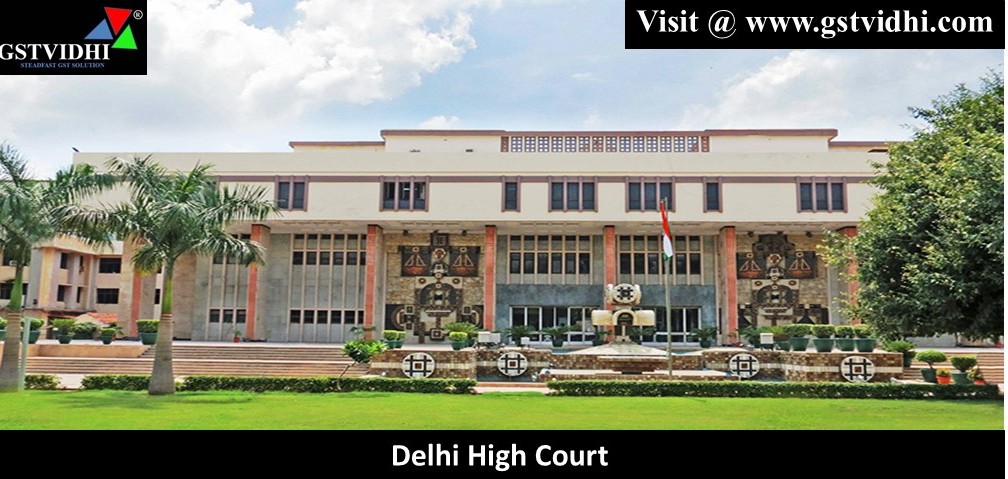
Delhi High Court Permits Taxpayer to File Delayed GST Appeal
Against Retrospective Cancellation Subject to Costs
(M/s
Global Infratech v. Principal Commissioner of Department of Trade and Taxes,
Government of NCT of Delhi / High Court of Delhi / 30
January 2026 / W.P.(C) 11814/2025)
Introduction
In an important ruling
concerning cancellation of GST registration and availability of appellate
remedies, the High Court of Delhi in M/s Global Infratech v. Principal
Commissioner of Department of Trade and Taxes, Government of NCT of Delhi
allowed the taxpayer to file a delayed statutory appeal against retrospective
cancellation of GST registration.
The petitioner challenged
the cancellation order primarily on the grounds that the show cause notice was
vague, system-generated, and lacked proper application of mind. The petitioner
also argued that the cancellation order failed to disclose reasons justifying
retrospective cancellation of registration.
Although the Court did
not adjudicate the merits of the controversy, it exercised equitable
jurisdiction and permitted the petitioner to avail the alternate appellate
remedy, while protecting the petitioner from limitation objections. However,
the Court imposed costs of Rs.30,000 as a condition for granting such relief.
The judgment is
significant because it reflects the balanced approach adopted by the Delhi High
Court in GST matters by safeguarding procedural rights while simultaneously
discouraging taxpayer negligence and delay.
Facts of
the Case
The petitioner, M/s
Global Infratech, approached the Delhi High Court challenging the order dated
05.04.2024 whereby its GST registration was cancelled under the provisions of
the Central Goods and Services Tax Act, 2017.
The petitioner had
originally obtained GST registration on 01.07.2017.
According to the
respondents, the petitioner failed to file statutory GST returns, which
resulted in issuance of a show cause notice dated 14.11.2023.
Through the said notice,
the petitioner was informed that due to failure to furnish returns under
Section 39 of the CGST Act, its registration was liable to be cancelled. The
petitioner was directed to submit a reply and appear for personal hearing on 11.12.2023.
However, the petitioner
neither filed any reply nor appeared before the authorities for personal
hearing.
Consequently, the GST
authorities passed the impugned order cancelling the registration
retrospectively with effect from 01.04.2022.
Aggrieved by the
cancellation order, the petitioner filed the present writ petition before the
Delhi High Court.
Contentions
of the Petitioner
The petitioner challenged
the cancellation proceedings on several grounds.
Firstly, it was argued
that the show cause notice was merely a system-generated notice and did not
demonstrate any independent application of mind by the authorities prior to
issuance.
Secondly, the petitioner
contended that the notice was vague and failed to clearly specify whether
retrospective cancellation was proposed or whether cancellation would operate
prospectively from the date of the notice itself.
Thirdly, the petitioner
submitted that the cancellation order did not record any specific reasons
justifying retrospective cancellation of GST registration.
On these grounds, the
petitioner sought interference by the High Court.
Stand of
the Respondents
The respondents opposed
the writ petition and argued that the petitioner had an effective alternate
remedy of appeal which had not been availed.
The respondents further
contended that the authorities were statutorily empowered to cancel GST
registration with retrospective effect in cases involving non-compliance with
Section 39 of the CGST Act relating to filing of returns.
It was also argued that
the petitioner never raised objections before the authorities regarding
vagueness of the show cause notice or denial of opportunity of hearing.
Accordingly, the
respondents urged the Court not to exercise extraordinary writ jurisdiction in
the matter.
Proceedings
Before the Court
During the hearing, the
petitioner expressed willingness to avail the alternate remedy of appeal if the
Court granted protection against limitation.
The petitioner also
expressed readiness to pay reasonable costs as may be directed by the Court.
Taking note of the
submissions, the Court considered it appropriate to dispose of the writ
petition by permitting the petitioner to pursue the statutory appellate remedy.
Judgment of
the Delhi High Court
The High Court of Delhi
disposed of the writ petition with specific directions in favour of the
petitioner.
The Court permitted the
petitioner to file an appeal within two weeks from the date of the judgment and
directed that the issue of limitation shall not be raised against the
petitioner.
The Court further
directed that the appeal should be decided expeditiously on merits and
preferably within twelve weeks from the date of filing.
However, while granting
the relief, the Court imposed total costs of Rs.30,000 upon the petitioner. Out
of this amount:
- Rs.15,000 was directed to be
deposited with the respondent department; and
- Rs.15,000 was directed to be
deposited with the Delhi High Court Bar Association.
The Court also directed
that proof of payment of costs must accompany the memorandum of appeal.
Accordingly, the writ
petition was partly allowed in the above terms.
Significance
of the Judgment
This judgment is
important because it highlights the approach adopted by constitutional courts
while balancing procedural fairness with taxpayer responsibility.
The ruling demonstrates
that:
- High Courts may permit taxpayers to
avail delayed appellate remedies in appropriate cases;
- Courts may protect litigants against
limitation where interests of justice require;
- At the same time, negligence and
delay on the part of taxpayers can result in imposition of costs.
The judgment also
indirectly underscores the importance of issuing proper and reasoned show cause
notices in GST cancellation proceedings, particularly where retrospective
cancellation is contemplated.
Conclusion
The decision in M/s
Global Infratech v. Principal Commissioner of Department of Trade and Taxes,
Government of NCT of Delhi reflects the pragmatic and equitable approach
adopted by the High Court of Delhi in GST matters.
While the Court refrained
from directly adjudicating the legality of the cancellation order, it ensured
that the petitioner was not denied statutory remedies solely on technical
grounds of limitation.
At the same time, by
imposing substantial costs, the Court emphasized that taxpayers must act
diligently and cannot remain completely indifferent to statutory proceedings.
The judgment thus serves
as an important precedent on delayed GST appeals, retrospective cancellation
proceedings, and judicial balancing of procedural fairness with taxpayer
accountability.
Disclaimer: All the Information is based on the notification, circular advisory and order issued by the Govt. authority and judgement delivered by the court or the authority information is strictly for educational purposes and on the basis of our best understanding of laws & not binding on anyone.
Click here